
Best Season to See Humpback Whales in Banderas Bay
Why Banderas Bay is a Whale Sanctuary
Every winter, the Bay of Banderas becomes a nursery for the ocean's giants. The bay's deep, warm waters and protected coves offer the perfect conditions for humpback whales to mate, give birth, and nurse their calves. It is one of the few places in the world where you can witness these majestic creatures so close to the coast.
Official Season: November to March
Over 500 humpback whales migrate from the cold waters of Alaska to the Mexican Pacific every year. While you can spot them from November to March, the peak season is from December to February, when the bay is teeming with activity.
| Month | Whale Activity | Sighting Probability | Weather |
|---|---|---|---|
| November | Arriving in the bay | ⭐⭐⭐ Good | Sunny, 24-28°C |
| December | Mating season begins | ⭐⭐⭐⭐⭐ Peak | Sunny, 22-26°C |
| January | Calves are born | ⭐⭐⭐⭐⭐ Peak | Sunny, 22-26°C |
| February | Mothers with calves | ⭐⭐⭐⭐⭐ Peak | Sunny, 22-26°C |
| March | Migrating back north | ⭐⭐⭐⭐ Good | Sunny, 23-27°C |
Other Marine Life You Might See
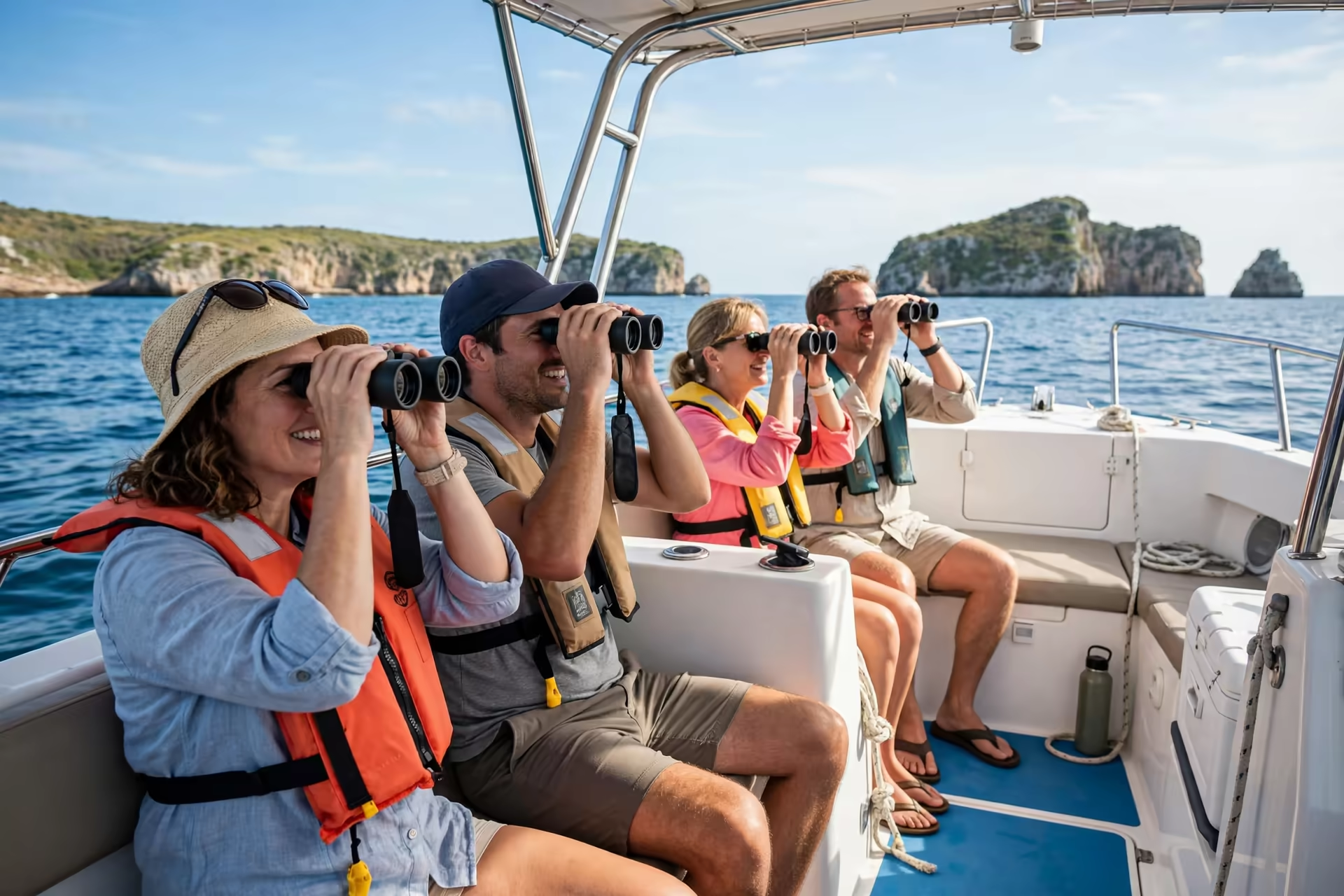
Humpback whales are the stars of the show, but they are not the only ones. Keep your eyes peeled for:
- Bottlenose and Spinner Dolphins: Often seen swimming in large pods alongside the boats.
- Olive Ridley and Leatherback Turtles: Frequently spotted floating near the surface.
- Giant Manta Rays: Occasionally breaching the surface in open water.
How to Spot a Humpback Whale
Whale watching is an art. Keep an eye out for these telltale signs:
- The Spout: A misty column of water shooting up to 10 feet in the air. It's the first thing you'll usually see.
- Breaching: When the whale launches its 40-ton body completely out of the water. An unforgettable sight!
- Tail Slapping: The whale slams its massive pectoral fin or tail on the surface, often a form of communication.
Responsible Whale Watching: The SEMARNAT Protocol
Mexico is a world leader in marine conservation. To protect the whales, our captains strictly follow the official SEMARNAT protocol:
- Maintaining a minimum distance of 30 meters (100 feet) from the whales.
- Reducing speed to a maximum of 5 knots in sighting zones.
- Limiting the observation time to 30 minutes per sighting to avoid stressing the animals.
- Never chasing or cornering the whales.
When you book with us, you are supporting ethical and sustainable tourism.
Can I Swim with the Whales?
No. Mexican regulations strictly prohibit swimming with or touching whales. It is a protected species, and any operator offering "swim with whales" tours is operating illegally. We prioritize the safety of the animals and our guests above all else.
Secure your Hidden Beach pass
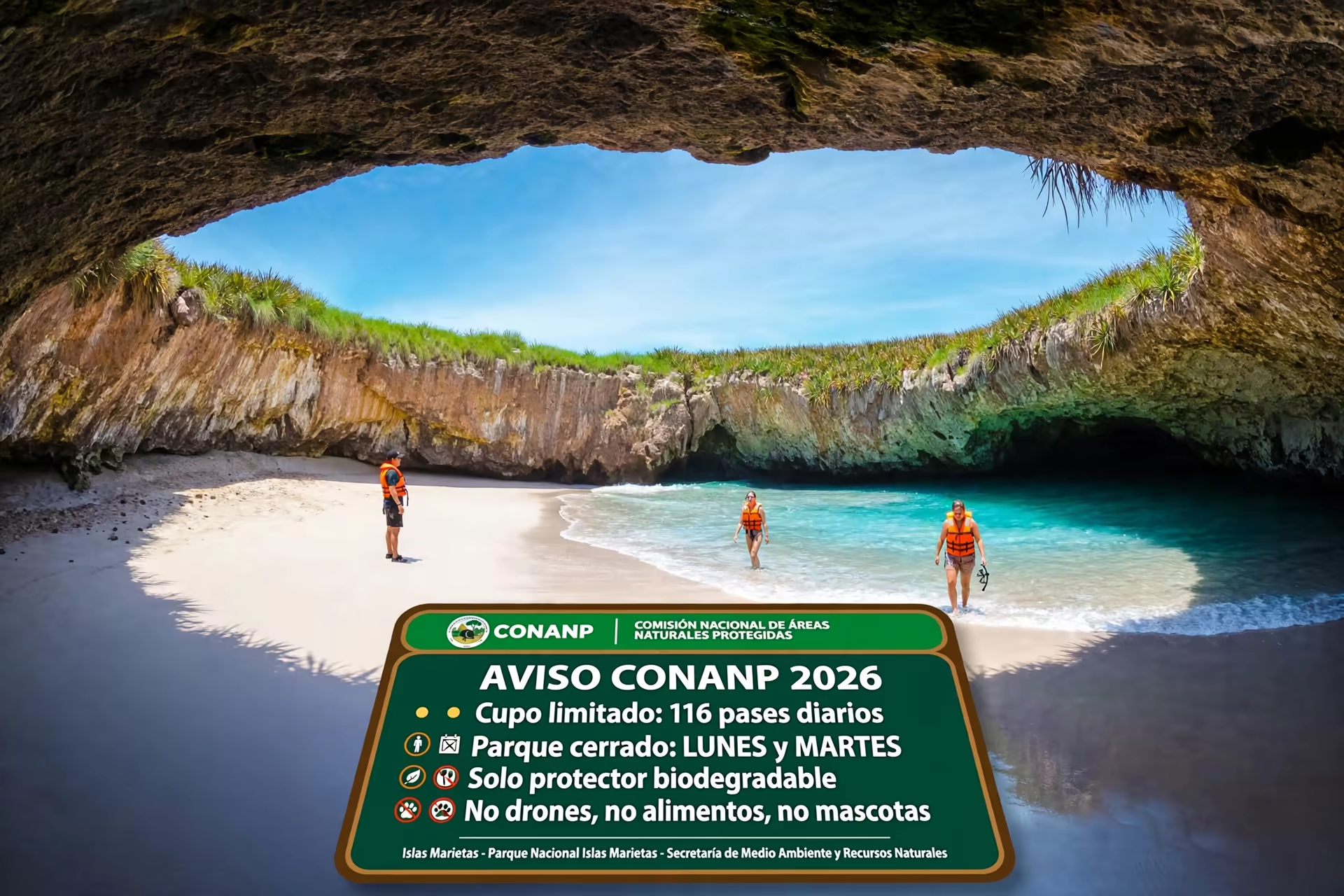
Avoid missing out on the 116 daily passes. Book now with Stripe and get instant confirmation.
Frequently Asked Questions
Are whale watching tours guaranteed to see whales?
While the probability is very high (over 80% in peak season), nature is unpredictable. If you don't see any whales on your tour, it is still a beautiful day on the water—but we do not offer refunds for lack of sightings as it is a natural phenomenon.
What is the best time of day to see whales?
Morning tours (8:00 AM to 11:00 AM) usually offer the calmest waters and the best lighting, making it easier to spot the whales' spouts.
Are the boats safe for children?
Absolutely. All our boats are equipped with life jackets (including child sizes), and our captains are certified in first aid and water rescue.