
History of the Marietas Islands National Park: From Firing Range to Sanctuary
Summary: from firing range to natural sanctuary
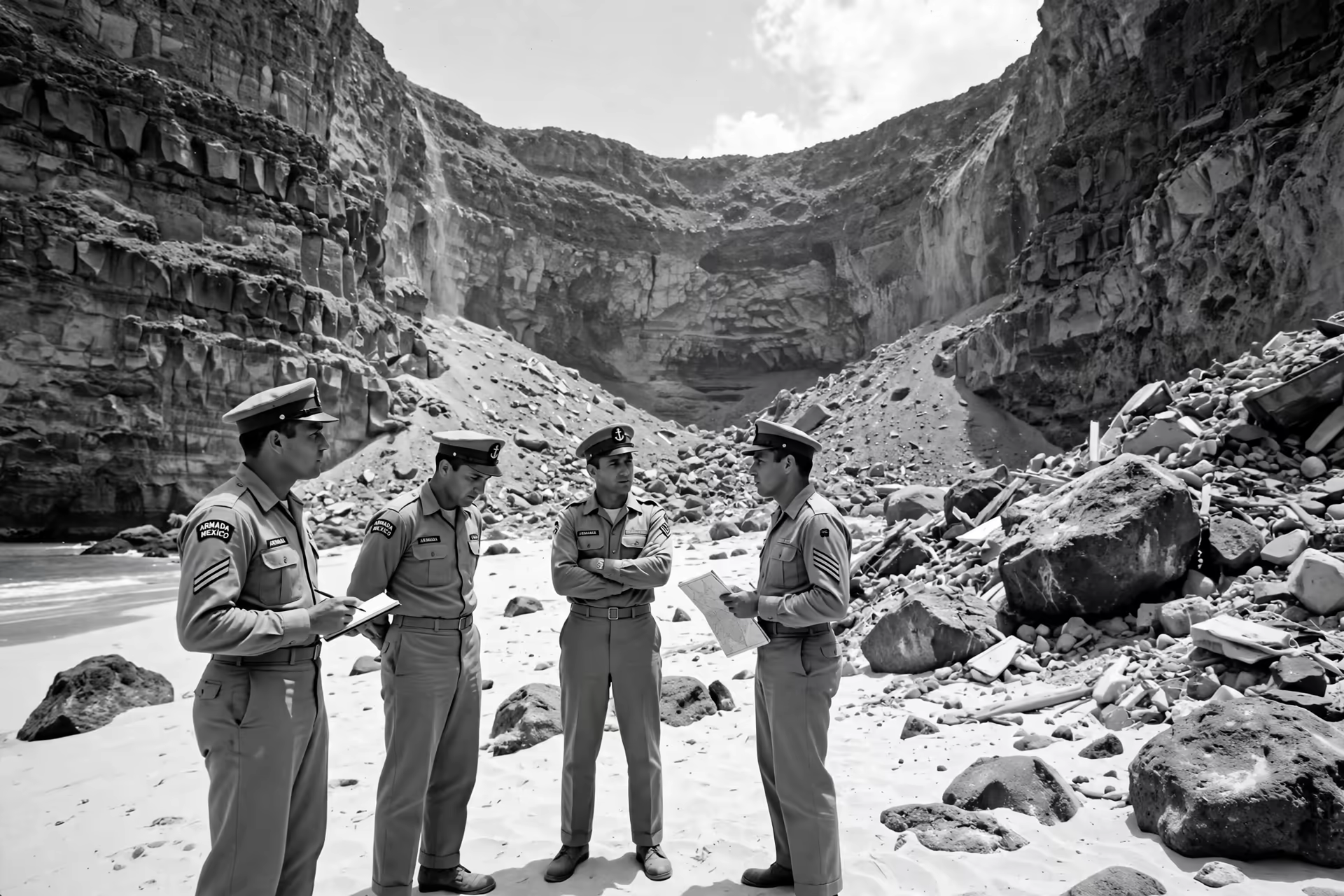
The Marietas Islands have a surprising history. They were used as a military firing range by the Mexican Navy between 1900 and 1960, which left craters and caves on the islands — including what is now the famous Playa del Amor. In 2005 they were declared a National Park, and in 2008 UNESCO named them a Biosphere Reserve.
Geological formation (millions of years ago)
The Marietas Islands are of volcanic origin, formed millions of years ago by tectonic activity in the Rivera Fault region. Their composition is basaltic rock and pumice, which explains their unique rock formations, natural arches and caves.
Pre-Hispanic era
Before the Spanish arrived, the Banderas Bay area was inhabited by indigenous groups such as the Huichol (Wixárika) and Cora. The islands were considered sacred and used for rituals, but not as permanent settlements due to the lack of fresh water.
Military firing range (1900-1960)
This is the most important and least known chapter. During the 20th century, the Mexican government used the Marietas Islands as a practice firing range for the Mexican Navy. For decades they were bombed with explosives that left:
- Internal craters on the islands
- Artificial caves and tunnels
- The opening of the crater that is now Playa del Amor
Ironically, what damaged the islands is what made them famous. Without those bombings, Playa del Amor would not exist.
The return of life (1960-2005)
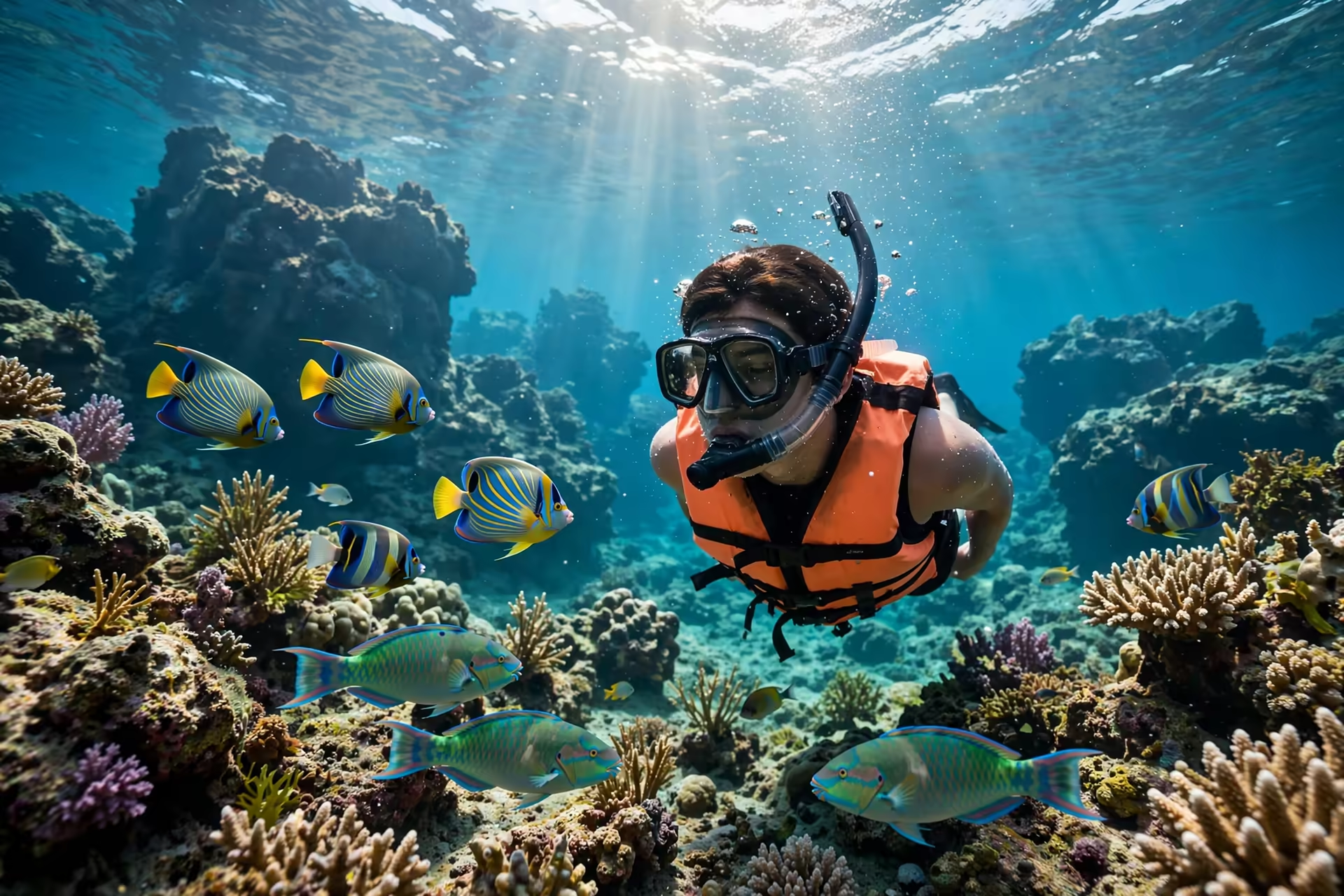
When military practices ceased, wildlife gradually returned. Seabirds (frigatebirds, blue-footed boobies, pelicans) recolonized the islands, and coral reefs regenerated.
National Park (2005)
On April 25, 2005, the Mexican government declared the Marietas Islands a National Park with an area of 1,383 hectares. This prohibited commercial fishing and extractive activities in the area.
UNESCO Biosphere Reserve (2008)
In 2008, UNESCO included the archipelago within the Islas Marías Biosphere Reserve. It is currently a conservation zone of international importance.
The coral crisis (2010-2016)
The increase in mass tourism between 2010 and 2016 caused severe damage to coral reefs. In 2016, CONANP implemented drastic measures:
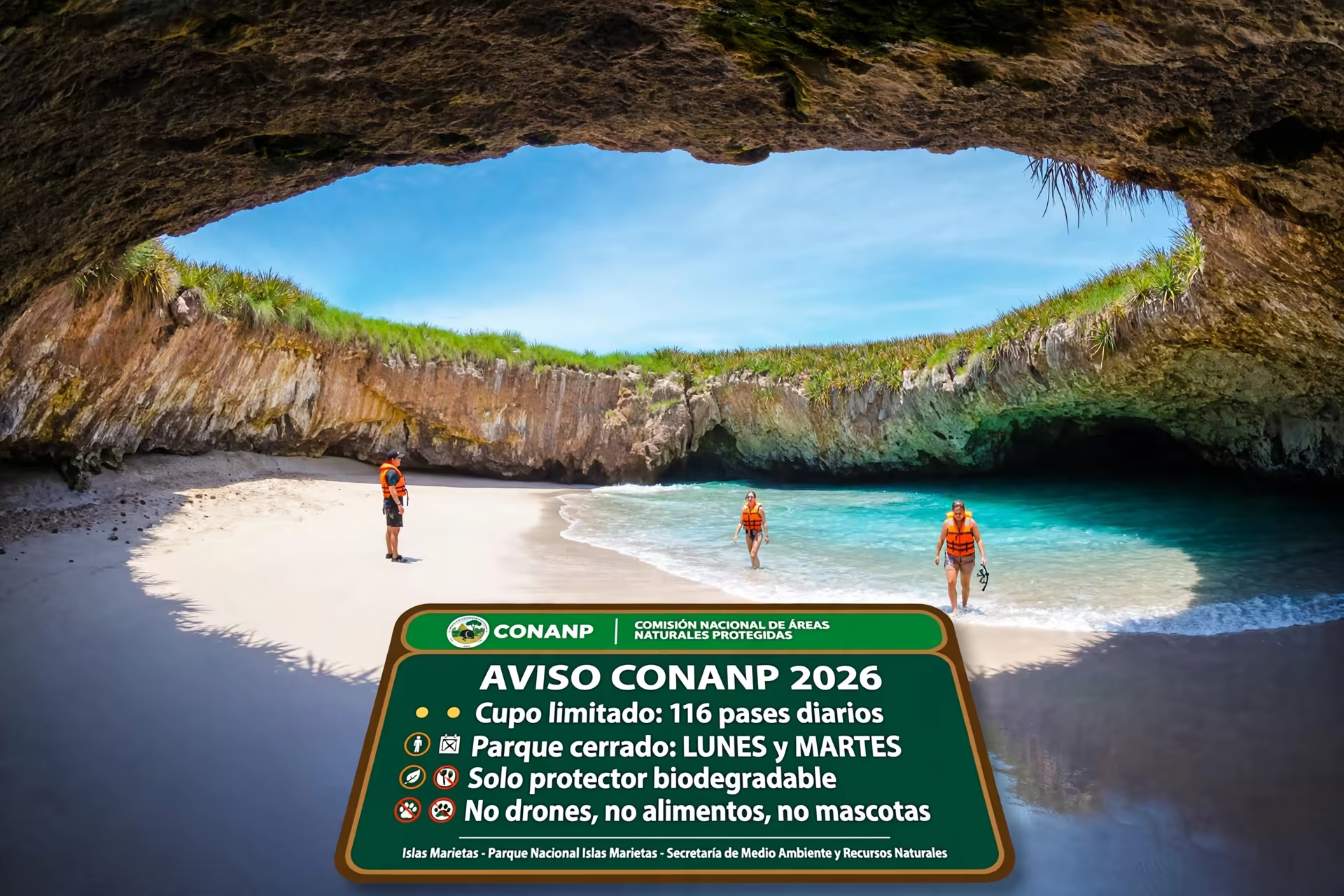
- Reduction of the Playa del Amor quota to 116 passes/day
- Weekly closure on Mondays and Tuesdays
- Prohibition of non-biodegradable sunscreens
- Strict regulation of tour operators
Present day (2026)
Today the Marietas Islands are one of the most visited destinations in Mexico, but under a model of regulated and sustainable tourism. The CONANP quota and weekly closures have allowed the reefs to slowly recover.
Current park fauna
- Seabirds: over 90 species (frigatebirds, blue-footed boobies, pelicans, gulls)
- Fish: over 100 reef species
- Sea turtles: olive ridley, leatherback and hawksbill
- Marine mammals: humpback whale (season), bottlenose dolphin, gray whale (occasional)
- Corals: over 15 species of hard and soft coral
Secure your Hidden Beach pass
Avoid missing out on the 116 daily passes. Book now with Stripe and get instant confirmation.
Frequently Asked Questions
Why are they called Marietas Islands?
The name "Marietas" comes from the old Spanish word "marieta," a diminutive of "María." It is believed to have been given by the first Spanish explorers in honor of the Virgin Mary.
Are they the same as the Islas Marías prison?
No. The Islas Marías (with an "s") are in Nayarit off the coast of San Blas and are a federal prison. The Marietas Islands (with a "t") are in Banderas Bay and are a tourist national park.
Can you visit the bombing craters?
Only Playa del Amor is accessible to the public. Other craters are protected or difficult to access.